
Research shows that managers believe 70% of the reason people leave a job is due to pay. However, actual data points indicate that nearly 70% of the reasons people quit a job have absolutely nothing to do with pay.
This has been true for many years, but it’s been turned upside down in the last 12-18 months.
See, when you offer me an extra 10% bump in pay, I may turn that down if I have a great manager, an amazing culture that aligns with my values, or meaningful and fulfilling work. However, offering me a 50% or 100% increase in pay suddenly tips the scales heavily in favor of that new offer (even though emerging data indicates that those decisions to leave often come with regrets).
What I’m trying to say is that the old models for what was true have been upended by the talent shortage and other factors. We see in the research that pay and benefits are one of the top reasons people left to go to new jobs, but they aren’t the only things. They also left because of stress and burnout, for instance, and paying more money doesn’t really help to mitigate those problems.
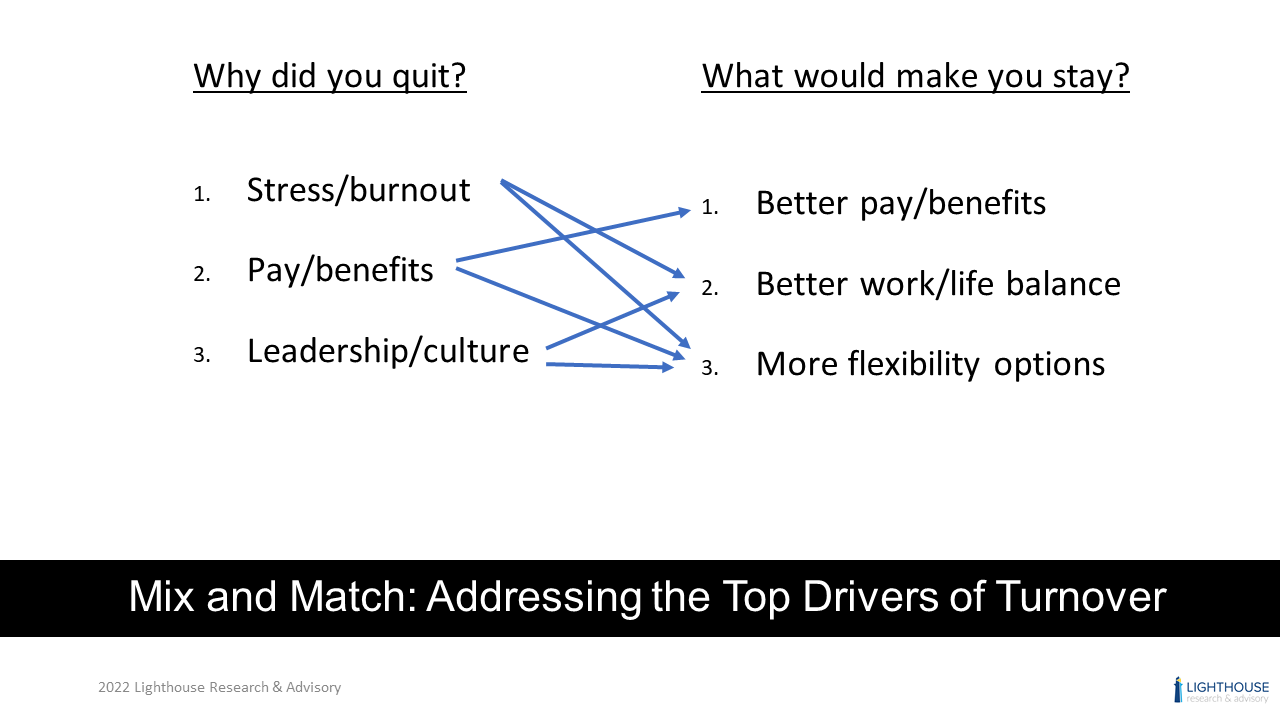
In a recent session with the team at OpenSesame called The Great Resignation? More Like the Great Reprioritization, I dove into some practical ideas from our research. If you want to get the session on demand, you can do that here. You’ll learn about trends like:
- Why people quit a job today
- What makes them more likely to stay
- How employers can make real change for the better
Bonus: hear from our Chief Culture Officer George Rogers on how DEI, leadership, and work intersect.
I hear from employers every day that are trying to make sure they are on the right path with this. While some have slowed hiring or even laid off some staff, others are stil hiring as quickly as possible to meet the demands of the business.
If nothing else, this is the point I want to get across: unlike the picture painted by the news where people are leaving jobs for cash or for fun, the truth is more nuanced than that. We have things we can do to help mitigate employee turnover, but they won’t happen by accident or naturally. We have to happen to this problem, not just have it keep happening to us.
While we can’t keep every person from leaving, I’ve talked with teams that have staff who are being targeted daily with recruiter calls that haven’t lost a single person in the last year. We have things we can do, and I’m much more interested in talking about those solutions than in hyping the problem or creating more hysteria where it isn’t needed.

Ben Eubanks is the Chief Research Officer at Lighthouse Research & Advisory. He is an author, speaker, and researcher with a passion for telling stories and making complex topics easy to understand.
His latest book Artificial Intelligence for HR (3rd Ed) showcases how employers can balance AI adoption with a people-first approach. It is the world’s most-cited research on AI applications for HR.
His other books include Talent Scarcity, which answers the question every business leader has asked in recent years: “Where have the high-quality workers gone, and how do we hire and keep them?” It shares practical and strategic recruiting and retention ideas and case studies for every employer.
Ben has more than 15 years of experience both as an HR/recruiting executive as well as a researcher on workplace topics. His work is practical, relevant, and valued by practitioners from F100 firms to SMB organizations across the globe.
He has spoken to tens of thousands of HR professionals across the globe and enjoys sharing about technology, talent practices, and more. His speaking credits include the SHRM Annual Conference, Seminarium International, PeopleMatters Dubai and India, and over 100 other notable events.
